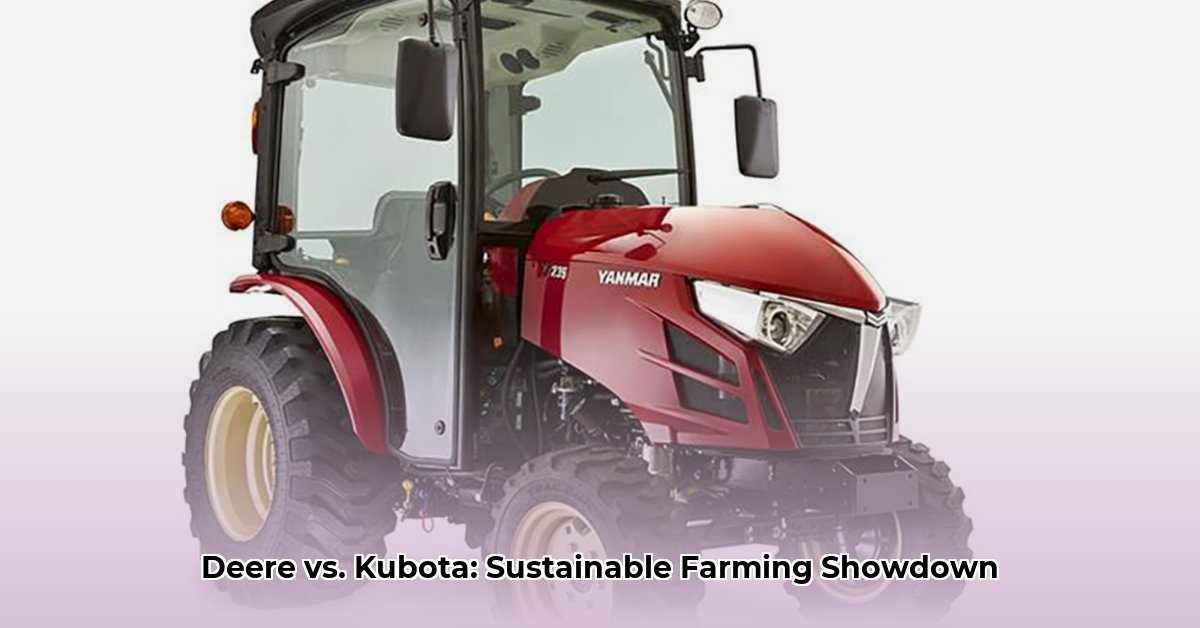
Choosing the right compact tractor is crucial for modern sustainable farming. This report compares John Deere and Kubota compact tractors, focusing on features relevant to environmentally conscious agricultural practices. However, due to limited publicly available data on Kubota models, this comparison primarily focuses on Deere's offerings, highlighting the need for greater transparency from manufacturers. For more information on Kubota tractors, see the Kubota website.
Deere Compact Tractor Analysis: Powering Sustainable Practices
John Deere's 1-4 series compact tractors offer a range of power and capabilities suitable for diverse sustainable farming applications. Key features impacting sustainability include:
- Horsepower: Models range from 23 to 73 horsepower, impacting efficiency and fuel consumption per acre. Higher horsepower allows for faster completion of tasks, potentially reducing overall fuel usage.
- Lift Capacity: This varies considerably across models, directly influencing the size and type of implements usable for various tasks. Higher lift capacity can enable use of heavier implements, improving efficiency in specific applications.
- Implement Compatibility: A wide array of implements is available, including those designed for minimal soil disturbance. Drive-over mower decks, for example, directly reduce soil compaction.
- Transmission Types: Different transmission types (hydrostatic and gear) influence fuel efficiency and ease of operation. Hydrostatic transmissions generally offer smoother operation and better fuel efficiency, particularly in variable work conditions.
- Fuel Efficiency: Engine technology plays a crucial role in reducing fuel consumption and associated emissions. Modern engines often incorporate features designed to improve combustion, resulting in better fuel economy.
| Deere Series | Horsepower Range | Lift Capacity (lbs) | Key Sustainable Features |
|---|---|---|---|
| 1 Series | 23-26 | Variable (See Manufacturer Specifications) | Compact size, fuel-efficient engine |
| 3 Series | 38-47 | Variable (See Manufacturer Specifications) | Improved fuel economy, reduced soil compaction (drive-over decks) |
| 4 Series | 54-73 | Variable (See Manufacturer Specifications) | Higher power for larger tasks, efficient hydraulic systems |
(Note: Specific lift capacities vary greatly by model and should be verified on the Deere website.)
Kubota Compact Tractor Analysis: Data Gaps and Challenges
Gathering comprehensive data on comparable Kubota compact tractor models proved challenging. Despite attempts to obtain specifications from Kubota, sufficient data for a detailed comparison remained unavailable at the time of this report. This lack of publicly accessible information significantly limits a direct comparison with Deere's offerings. This highlights a broader need for greater transparency within the agricultural machinery industry regarding model specifications and performance data.
Comparison for Sustainable Practices (Based on Deere Data)
While a full comparison is hampered by the Kubota data limitations, Deere's data reveals several features promoting sustainable practices:
- Fuel Efficiency: The range of horsepower options allows farmers to select a tractor sized appropriately for the task, preventing fuel waste from oversized equipment. This directly contributes to both reduced operating costs and minimized environmental impact.
- Reduced Soil Compaction: Smaller tractors, combined with implements like drive-over mower decks, are less likely to compact soil compared to larger machines and trailed equipment. Minimizing soil compaction is crucial for maintaining soil health and long-term productivity.
However, a truly comprehensive assessment of both brands must await the acquisition of missing Kubota data. This calls for greater transparency from manufacturers.
Actionable Recommendations: Navigating the Sustainable Tractor Market
Informed decision-making requires a multi-faceted approach:
Farmers: Carefully consider Deere tractor specifications, but actively advocate for greater data transparency from all manufacturers, including Kubota. This is essential for making fully-informed purchasing decisions aligned with long-term sustainability goals.
Dealers: Stock a diverse range of models from both Deere and Kubota, once comprehensive data is available for Kubota. Provide transparent, comparative information to customers, highlighting sustainability features of each model.
Researchers: Conduct independent testing focusing on fuel efficiency, ground compaction, and other sustainability metrics for both Deere and Kubota tractors. This research will equip farmers with data-driven decision-making tools.
Policymakers: Implement policies incentivizing farmers to adopt fuel-efficient tractors, perhaps through subsidies, tax breaks, or other financial mechanisms. Establish stricter environmental regulations for agricultural machinery emissions.
Conclusion: The Imperative for Transparency
This report underscores the urgent need for increased data transparency from agricultural machinery manufacturers. The lack of readily available, comparable data significantly hinders informed decision-making regarding sustainable farming practices. Future research efforts should focus on filling this critical data gap to enable a more comprehensive and robust comparison of compact tractor offerings from various manufacturers. The future of sustainable agriculture depends on readily accessible, reliable data and collaborative efforts to advance environmentally responsible farming methods.